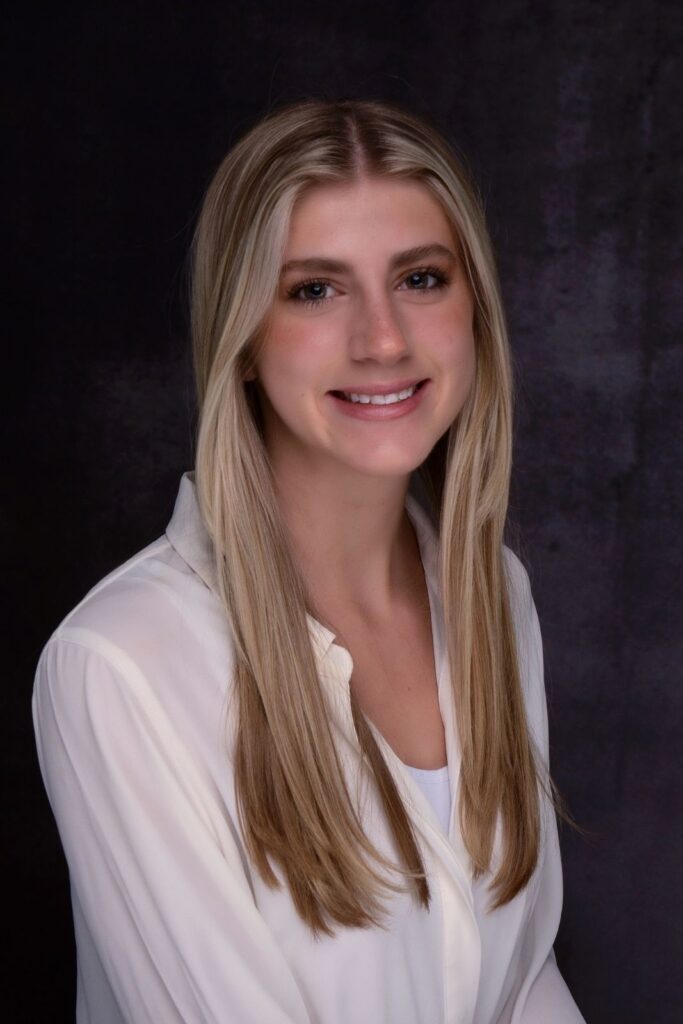
My first substantive conversation with Adeline was 5 days before the University of Georgia’s early decision deadline. Her mom and I had spoken months prior and nothing materialized. In some cases the use of an essay/educational consultant is absolutely necessary, in others it is helpful and can bolster scholarships and merit money; people like me can also help parents navigate atypical or prickly application situations. But, in some scenarios, people like me can actually hinder the progress a student would make working on their own or with their family. It is all very personal and situation specific.
Adeline had exceptional grades, well-planned extracurricular activities that beautifully rounded out her resume, strong test scores, and she’s a beast on the soccer pitch. While I was sad that we ultimately didn’t get to spend several months together, Adeline is one of the fortunate students who possess a unique combination of intelligence, drive, determination, smart decisions, and experience. She has amazing parents, and I knew she would end up accepted wherever she wanted to go. Admittedly, I wanted to work with her for selfish reasons: her noggin would make one hell of a playground for me. I wanted to prattle about in there and see what made her tick. But, alas, it seemed Adeline didn’t need me. In truth, changemaking students like Adeline don’t come around often.
When the call came from her mom that Adeline was stuck, I knew, without any confirmation, why I was needed at the 11th hour. Adeline falls into a very unique category; she is a prolific thinker, articulate, well-read, and has clear goals. She also works her ass off and has her priorities straight. She couldn’t get her mind to shut up, and I was certain of the problem before her mom breathed word of it. The more she thinks the more powerful and prolific her thoughts become; and it doesn’t stop. It’s a blessing and a curse.
The problem is that Adeline’s kind of brain energy doesn’t bode well for narrative college application essays; hers kept adding gasoline to the fire by trying to add substantiating info. Add this, write more, add that, and then nearly done with one essay, her brain butts in and says, “what about this other topic to make for a better example?” I’ve seen it manifest in students throughout the years, and let me tell you, it sucks for them, their parents, and anyone in their midst. It’s absolutely maddening to be that capable and to have your brain throw you in the trunk putting you in lockdown. It’s not writer’s block, it’s known as a writer’s jag. A flood of thoughts and words.
Like many students that have similar personality profiles and fall into the same Strong Inventory assessment categories, Adeline herself was the hindrance to completing what is a seemingly benign task. She embodies drive, self determination, and has agency. My God does she have agency. She will change the world, of that I am certain. The problem was with the machine that lives in between her ears: it was being forced to write a high-stakes essay in an entirely new and non-scientific way. Had she been writing about gene replication in AP Bio, I’d never have had the pleasure to work with her because her essay would have been done before it got started. It would have been clean, articulate, and well-argued.
Adeline has lightning-fast logic and reasoning skills. Combined with a work ethic I’ve never before seen in a student her age and what you get is a perfectly precarious Molotov cocktail. She requires little to no assistance or redirection, is self assured, not cocky or arrogant. She is a utilitarian and pragmatist…she knows what she wants and nothing will stand in her way. Ever. Well, except her own head throwing more ideas at her.
Her problem was that she couldn’t get her mind to cooperate with this type of writing process. She’s hard in the sciences and has mad research skills and bulletproof methodological ideas…she just couldn’t get her brain to aggregate her thoughts, organize them, and pen a cogent and personally-reflective narrative essay with a clear intro, theme, and conclusion. Common App essays require no empirical evidence; they are compelling purely through their narrative delivery.
You see, strong scientific thinking leads to more questions and fewer definite answers. The process builds on itself, research here and there adds up to make for a compelling body of scientific knowledge. Often, scientific writing cannot be neatly concluded. Don’t get me wrong, Adeline’s writing skills are among her top assets. But the kind of writing required of the Common App essay is not the same required in AP Bio.
5 days before the first big deadline of the application season, she sends me roughly 15 pages of essays, all completed in various stages, for the Common App. There were so many topics, angles, hooks, and themes; it was hard to disambiguate. Her prose made it clear she was a grammar snob and word nerd, in the best possible way. And also a perfectionist. She made Lilith Sternin-Crane from Frasier seem comically pedestrian.
The problem is, Common App essays don’t lend themselves to structured scientific writing. Sure, brainstorming, outlining, and sticking to a general writing plan helps…but this essay is a reflection of its writer, who is a real person with particularities, oddities, an ever-changing mind, and newly forthwith memories. The Common App essay is alive and morphs into a final piece that cannot be totally foreseen or wholly planned at the outset. There are always a few additions with the finished product. And knowing when to stop writing is hard. Students either find they’ve blown past the 650 words or they have the exact word count but the essay is lacking substance. There’s a reason why it’s structured the way it is.
When Adeline thinks, her brain accesses every available resource for use at max capacity. This is an exceptional trait but for someone with her hardwiring, this is the worst possible project. So, while her task was the same as every other applicant, her brain is not. Adeline was paralyzed by an information flood. In scientific writing there are clear indicators you have answered the question, even if you were unable to answer the question. That, in and of itself, is an answer. Not in the Common App.
After reading her work, Adeline had a clear, central theme across every version she sent me, and yet she didn’t hit it head on. This perplexed me. Here’s a young woman that would take on a debate with anyone, prepared or not, and she left a giant sink hole in her own writing. I saw it, her mom did, and I’m 100% certain Adeline did, too, even though she didn’t articulate it. She was too principled to put words to her quagmire. When asked about it, the previously erudite communicator completely locked down.
After dancing against the clock, we had only 4 days left, I finally determined that the crux of Adeline’s topic was as equally complex as it was extraordinarily sensitive. I immediately learned the only things more robust than her intellectual capacity are her personal ethics and loyalty. She refused to violate the confidence of her subject-matter, and she couldn’t find a workaround; and because of the nature of her narrative, she couldn’t ask outright for help. Adeline had tried to MacGyver her topic in an ethical manner and threw every literary device at the subject matter, all to no avail. So, her brain did what every smart one does, try again. And again. Hence the 15 pages of essays I got from her.
Adeline thoughtfully shared just a few morsels of information in one of our conversations, none violating her code of ethics, but just enough to fill the gap…and help me help her. I’m grateful she trusted me because the end result contained every last detail required by the Common App and then some. It was the stickiest of sticky topics but a very common subject matter. Those morsels provided a contextual and razor sharp hook. Most importantly, her final work product laid the intellectual red carpet out for admissions people to see straight into her mind, and what a sight it is to behold. She was accepted to every school but one. Their loss.
She will go on to be a cognitive neuroscientist, a psychiatrist, or some other heady professional requiring at least a decade of education. In 15 years, you should look her up. You’ll be able to trust her with teaching your kid to drive a stick shift (that was another fun essay topic she wrote about, and her mom hilariously and barely passed the task), for treating your child’s neurodivergence in her professionally trained capacity, and for making the best strawberry mimosa breakfast rolls for your holiday table. But mostly, you’ll be able to trust her personal and academic integrity.
I cannot wait to see what the future holds for her.